
Vitamins for Hangovers: What They Do and Why Mood EQ Goes Further
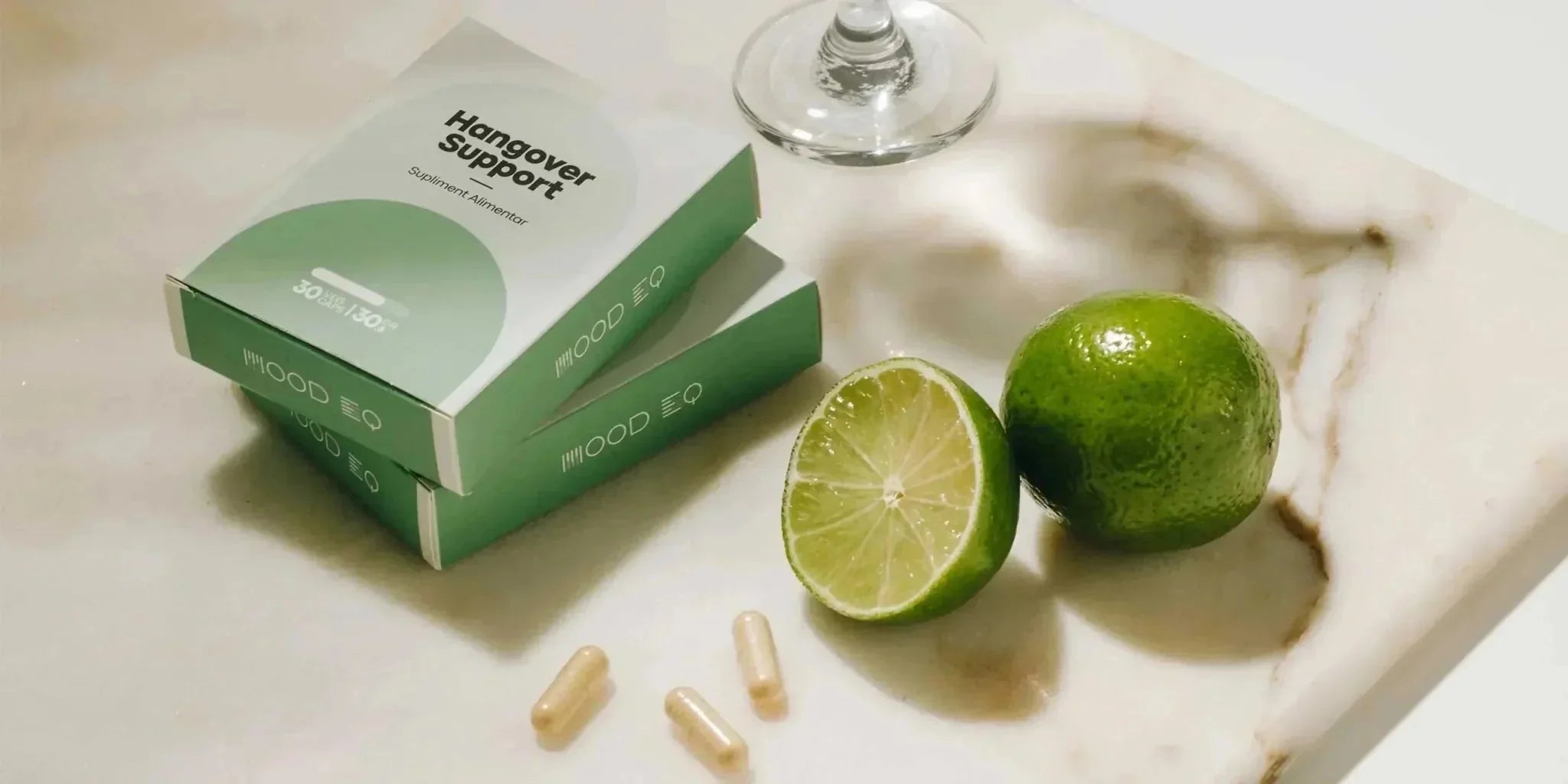
"Which vitamins should I take for a hangover?" is one of the most common questions after a long night. Vitamins and minerals have a real place in this conversation: they contribute to energy, the reduction of tiredness, psychological function, electrolyte balance, immunity and antioxidant protection.
Mood EQ starts with those authorised functions, but it does not stop at a multivitamin. It combines them with NAC, standardised milk thistle extract, taurine, acetyl L-carnitine and alpha-lipoic acid in a formula taken before your first drink.
B vitamins: energy and the reduction of tiredness
Mood EQ contains six B vitamins: B1, B2, B3, B5, B6 and B12. Each is listed separately with its own dose.
- B1, B2, B3, B5, B6 and B12 contribute to normal energy-yielding metabolism;
- B2, B3, B5, B6 and B12 contribute to the reduction of tiredness and fatigue;
- B1, B3, B6 and B12 contribute to normal psychological function;
- B2, B3, B6 and B12 contribute to the normal functioning of the nervous system.
These roles directly explain why B vitamins are relevant to a formula designed for the morning after. Mood EQ includes all six, rather than one or two hidden behind a generic "B-complex" label.
Vitamin C: more than a familiar ingredient
Vitamin C contributes to:
- the protection of cells from oxidative stress;
- normal energy-yielding metabolism;
- the reduction of tiredness and fatigue;
- the normal function of the immune system;
- the regeneration of the reduced form of vitamin E.
Mood EQ provides 150 mg of vitamin C per two-capsule serving, equivalent to 187.5% of the nutrient reference value. It is a clearly disclosed dose and one of the central elements in the formula's antioxidant layer.
Useful food sources of vitamin C include peppers, citrus fruit, kiwi, strawberries and broccoli.
Vitamin E: protection from oxidative stress
Vitamin E is a fat-soluble vitamin that contributes to the protection of cells from oxidative stress. Mood EQ contains 12 mg per serving, equivalent to 100% of the nutrient reference value.
Together with vitamin C, zinc, selenium, NAC and alpha-lipoic acid, vitamin E helps build a broader antioxidant layer. Food sources of vitamin E include nuts, seeds and certain vegetable oils.
Magnesium: energy metabolism and electrolyte balance
Magnesium contributes to:
- electrolyte balance;
- normal energy-yielding metabolism;
- the reduction of tiredness and fatigue;
- normal psychological function;
- the normal functioning of the nervous system and normal muscle function.
Mood EQ contains magnesium in citrate form, with its dose disclosed in the formula table. Its authorised functions make it relevant to energy, fatigue, electrolyte balance and psychological function - four areas that matter to how people describe the morning after.
Food sources of magnesium include pumpkin seeds, almonds, pulses and leafy green vegetables.
Zinc: cognitive function, immunity and antioxidant protection
Zinc contributes to normal cognitive function, normal immune function and the protection of cells from oxidative stress.
A 2019 observational study found an association between higher dietary intake of zinc and niacin and lower hangover severity. The study analysed participants' diets and cannot demonstrate causation, but the finding supports scientific interest in these nutrients in hangover research.
Meat, seafood, dairy products, pulses, nuts and seeds can all contribute to dietary zinc intake.
Selenium and molybdenum: small amounts, precise functions
Selenium contributes to the protection of cells from oxidative stress and normal immune function. Food sources include fish, eggs, meat and Brazil nuts, although the selenium content of Brazil nuts can vary considerably.
Molybdenum contributes to the normal metabolism of sulphur-containing amino acids. It is a less familiar micronutrient with a precise function - and another sign that the Mood EQ formula was designed beyond the obvious ingredients.
What studies say about vitamins, minerals and hangovers
The direct evidence is more modest than many commercial pages suggest.
In a randomised study published in BMJ Nutrition, Prevention & Health, a mixture containing only vitamins and minerals did not significantly improve symptoms compared with placebo. The formula that also contained plant extracts produced results for several individual symptoms. The study did not test Mood EQ, but it helps explain why a multi-layer formula is more compelling than a basic multivitamin.
Across the category, a systematic review of randomised trials rated the available evidence as very low quality. Studies were small, tested different products and used inconsistent methods.
The takeaway: vitamins and minerals provide a solid nutritional foundation. Mood EQ builds on that foundation with amino acids, antioxidant compounds and a standardised plant extract.
Food still matters
A food supplement complements the diet; it does not replace it. Before an evening when you choose to drink, a normal meal and adequate hydration are more useful than trying to "recover everything" with very high vitamin doses the next day.
Chronic excessive alcohol consumption is associated with nutritional deficiencies, but that medical context should not be confused with the effect of a single evening in a healthy adult.
Why these nutrients are in Mood EQ
Mood EQ Hangover Support brings them together in a formula taken before your first drink. You get six B vitamins, vitamins C and E, magnesium, zinc, selenium and molybdenum - with every dose disclosed.
On top of that foundation, the formula adds NAC, 200 mg of silymarin from standardised extract, taurine, acetyl L-carnitine and alpha-lipoic acid. That is what separates Mood EQ from a vitamin sachet or a product built around caffeine.
Early nutritional support through 17 ingredients and 17 doses you can verify.
See the complete Mood EQ formula →
Sources and further reading
- EU Register of Nutrition and Health Claims
- Commission Regulation (EU) No 432/2012
- Dietary Nutrient Intake, Alcohol Metabolism, and Hangover Severity
- Randomised intervention study on vitamins, minerals and hangover symptoms
This article is for information only. It does not recommend megadoses of vitamins or minerals. Follow the dose on the product label and speak to a healthcare professional if you take medication or have a medical condition.
By Bogdan Georgescu, founder of Mood EQ



