
Why They Happen and How to Prepare Before Your First Drink
A hangover does not necessarily begin when you wake up. Researchers define it as a combination of physical and mental symptoms that follows an episode of alcohol consumption, usually as blood alcohol concentration approaches zero.
Headache, thirst, nausea, fatigue, poor sleep and difficulty concentrating do not have one single cause. That is why a well-designed morning-after formula should not rely on water, caffeine or one headline ingredient alone.
What happens when you drink alcohol
Ethanol is absorbed through the stomach and intestines before entering the bloodstream. The body begins to metabolise it, mainly in the liver.
First, alcohol dehydrogenase converts ethanol into acetaldehyde. Aldehyde dehydrogenase then converts acetaldehyde into acetate. NIAAA explains this process in detail in its guide to alcohol metabolism.
The rate varies between people and is influenced partly by genetics. Coffee, cold showers and supplements do not "burn off" alcohol faster or rapidly lower blood alcohol concentration.
Why hangovers happen
Fluid loss
Alcohol temporarily suppresses the release of vasopressin, a hormone that helps the kidneys retain water. More frequent urination can contribute to thirst, dry mouth and dizziness. Vomiting or diarrhoea can increase fluid loss further.
Hydration matters, but dehydration alone does not explain every symptom.
Fragmented sleep
Alcohol may help you fall asleep more quickly, but sleep tends to become more fragmented and less restorative. Earlier waking and changes to normal sleep stages contribute to next-day fatigue.
Stomach irritation
Alcohol can irritate the stomach lining and increase acid secretion. This can contribute to nausea, abdominal discomfort and loss of appetite.
Inflammation and oxidative stress
An analysis of the inflammatory response to alcohol reported associations between hangover severity and certain markers of inflammation and oxidative stress. The research does not demonstrate that taking one antioxidant will stop the process, but it does help explain why a hangover is more than a simple lack of water.
Alcohol metabolites and neurochemical changes
A review of biochemical and neurochemical mechanisms discusses the possible involvement of alcohol metabolites, neurotransmitters, inflammation and mitochondrial function. The importance of each mechanism may differ between individuals.
How long does a hangover last?
Duration depends on how much and how quickly you drink, sleep, food intake, individual characteristics and the type of drink. Symptoms can last 24 hours or longer.
There is no universal moment when the body has "finished detoxing". If you still feel impaired, do not drive or perform tasks that require attention, even if you assume your blood alcohol concentration has fallen.
What you can do before and during the night
No strategy guarantees that you will avoid a hangover. The risk falls first and foremost when the amount of alcohol falls.
- eat before drinking and do not drink on an empty stomach;
- drink more slowly and decide on a limit in advance;
- alternate alcohol with water or alcohol-free drinks;
- avoid combinations with medicines that interact with alcohol;
- do not use an anti-hangover product as a reason to drink more;
- leave enough time for sleep and recovery.
What research says about hangover remedies
A systematic review of 21 randomised, placebo-controlled trials found positive results for several individual interventions, but rated the overall quality of evidence as very low. In other words, the field is promising but still fragmented.
The same limitations appear repeatedly: small groups, different methods, different symptom measures and the difficulty of standardising alcohol consumption. For buyers, formula transparency therefore matters: if an outcome cannot be guaranteed, you should at least be able to verify exactly what you are getting.
Where Mood EQ fits
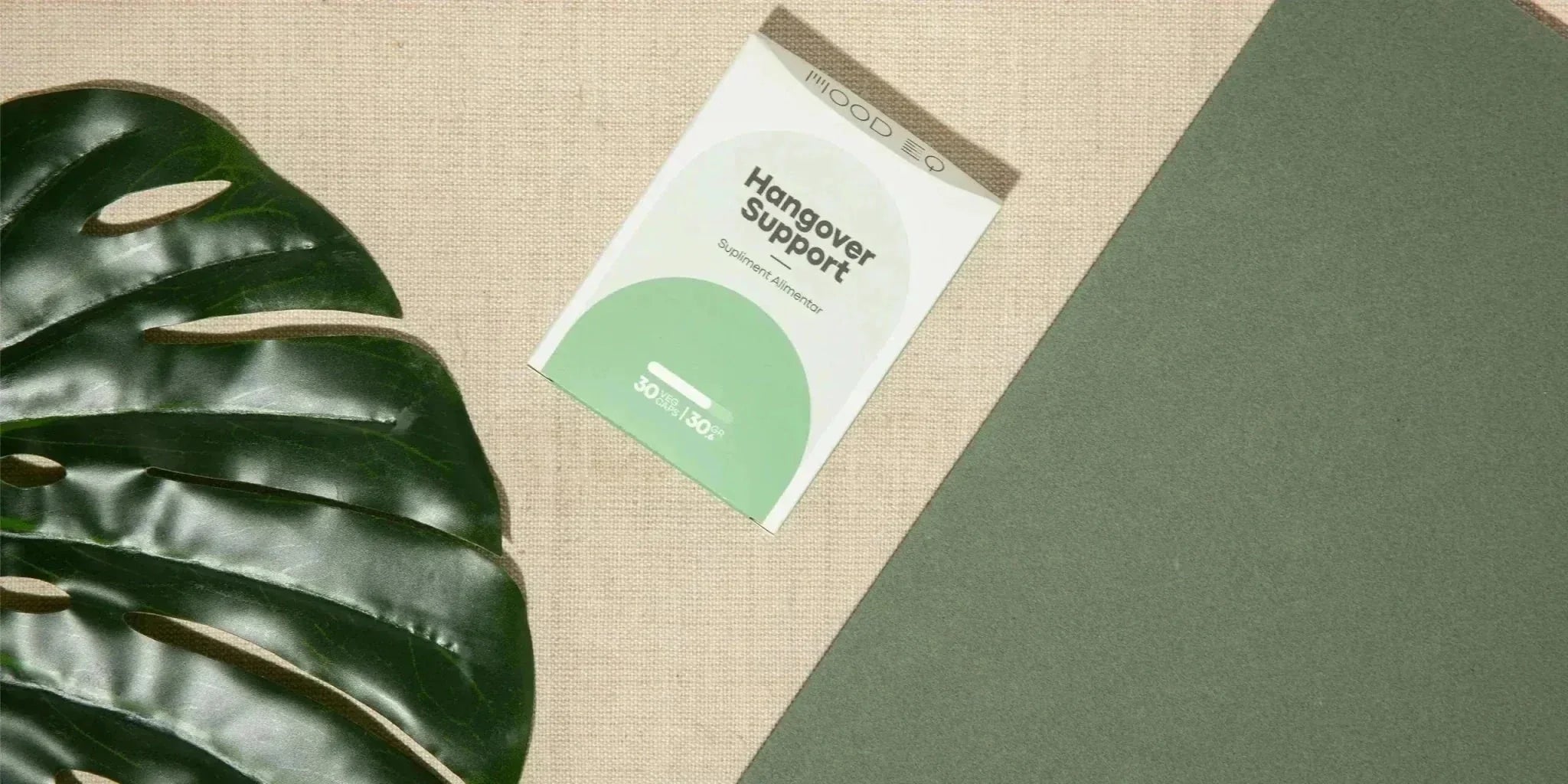
Mood EQ Hangover Support is the morning-after supplement taken before your first drink. The idea is simple: when you choose to drink, nutritional support can already be there when the night begins instead of arriving the next morning.
It provides early nutritional support through 17 ingredients, with every dose disclosed. Authorised health claims for nutrients in the formula include:
- B vitamins and magnesium contribute to normal energy-yielding metabolism;
- vitamins B2, B3, B5, B6 and B12, vitamin C and magnesium contribute to the reduction of tiredness and fatigue;
- magnesium contributes to electrolyte balance and normal psychological function;
- vitamins C and E, zinc and selenium contribute to the protection of cells from oxidative stress.
Beyond this nutritional foundation, the formula adds ingredients that go further than a multivitamin:
- 360 mg NAC, a precursor to glutathione;
- 250 mg milk thistle extract, providing 200 mg of silymarin;
- 230 mg taurine, with no caffeine;
- 200 mg acetyl L-carnitine;
- 60 mg alpha-lipoic acid.
These ingredients were selected from research relevant to oxidative stress, energy metabolism and alcohol-related contexts. They are not a promise that Mood EQ eliminates alcohol; they are the reason the formula offers more than a handful of vitamins taken at random the next morning.
In short: 17 ingredients. Every ingredient named. Every dose disclosed. Nutritional support before your first drink, not an improvised fix the next morning.
Discover Mood EQ and see all 17 doses →
Signs that it may be more than a hangover
According to NIAAA guidance on alcohol overdose, severe confusion, slow or irregular breathing, loss of consciousness, seizures, vomiting and being unable to wake someone may indicate alcohol poisoning. This is a medical emergency.
Do not leave the person alone or assume they can "sleep it off". Seek emergency medical help immediately.
Sources and further reading
- NIAAA: Hangovers
- NIAAA: Alcohol Metabolism
- NIAAA: Understanding the Dangers of Alcohol Overdose
- Alcohol Hangover: Underlying Biochemical, Inflammatory and Neurochemical Mechanisms
- The Inflammatory Response to Alcohol Consumption and Its Role in Hangover
This article is for information only and does not replace medical assessment. Mood EQ is a food supplement, not a treatment for alcohol poisoning, alcohol dependence or liver disease.
By Bogdan Georgescu, founder of Mood EQ



